
787 974 136

In the food industry, crises arise more quickly than many manufacturers realise. All it takes is a single non-conformity detected by a customer, a problem with raw materials from a supplier, or a laboratory test result that deviates from the norm for a company to find itself under enormous pressure. At such times, it is not just product quality that matters. What matters most is whether the organisation can respond quickly, in an orderly manner and without chaos.
This is precisely why an increasing number of manufacturers view ISO 22000 not only as a food safety system, but also as a safeguard for the company in the event of a crisis. A well-implemented system does not completely eliminate the risk of problems, but it does significantly limit their consequences – financial, operational and reputational.
Many food safety incidents do not occur suddenly. There are usually warning signs beforehand: deviations in production parameters, hygiene issues, storage errors, incorrect transport temperatures, or repeated complaints regarding the same batch of product.
Companies operating without a structured monitoring system often only notice the problem once the consequences are already visible on the market. ISO 22000 changes this approach. The system requires regular monitoring of processes, hazard analysis and documentation of activities at every stage of production. This enables the organisation to detect irregularities more quickly and respond before the situation escalates into a serious crisis.
This is particularly important in the food industry, where even a minor technical issue can lead to product recalls, the loss of a contract or problems with regulatory authorities. The sooner a company identifies the source of the risk, the greater the chance that it will limit the scale of losses.
The biggest problem for many organisations during a crisis is not the incident itself, but the resulting information chaos. A lack of clear procedures, incomplete documentation, difficulties in establishing responsibility, and hasty decisions made under time pressure can exacerbate the problem more than the original non-compliance.
ISO 22000 helps to organise how the company operates in crisis situations. The company has defined procedures, knows who is responsible for specific actions, and has records that allow for a rapid analysis of the production process. In practice, this means the ability to determine more efficiently:
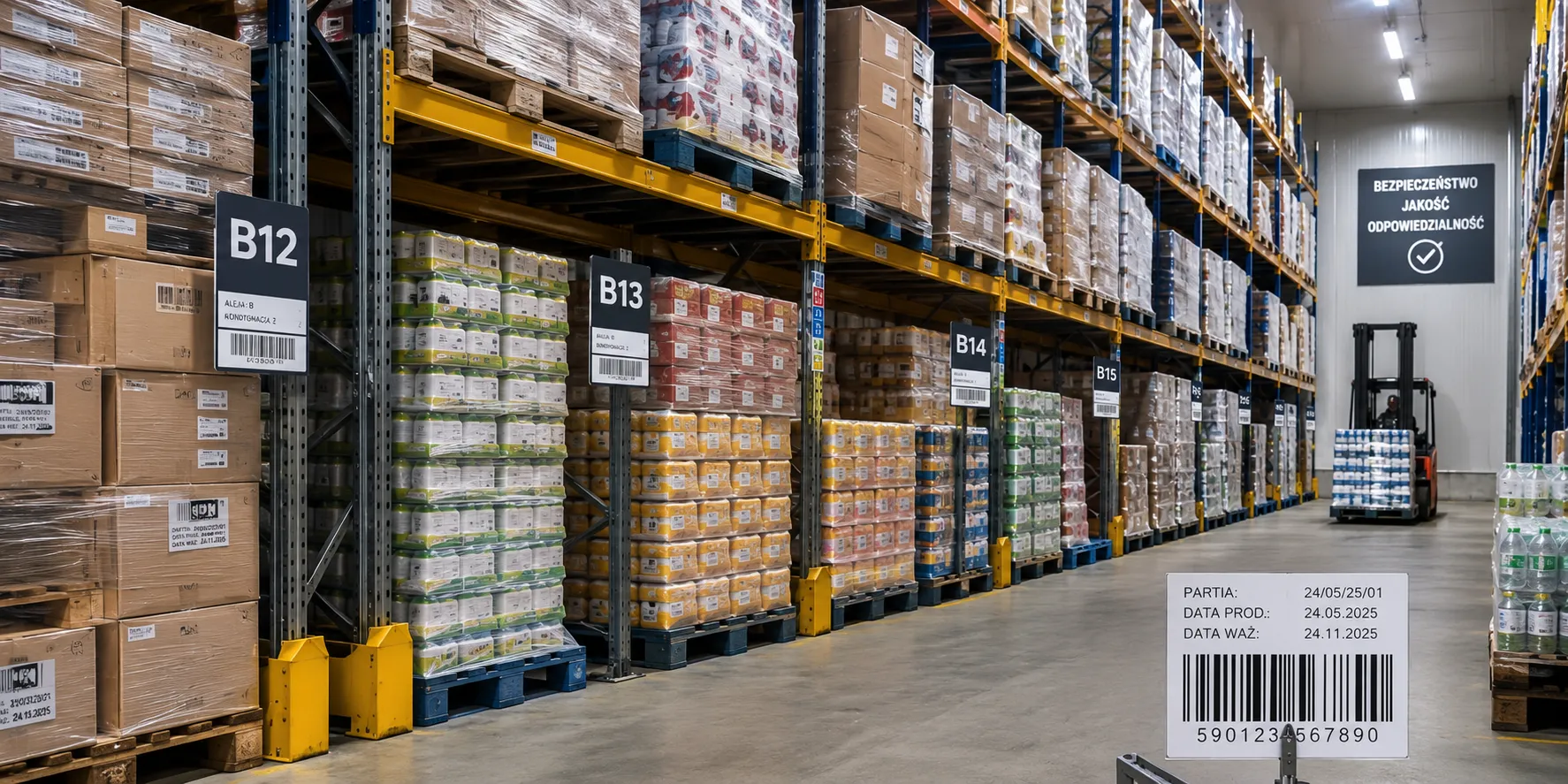
Traceability is also of paramount importance. In a crisis situation, the response time determines the scale of the problem. A manufacturer who can quickly determine the extent of the risk and limit actions to a specific batch of the product is in a much better position than a company operating on a ‘just in case, let’s recall everything’ basis.
In the food industry, rebuilding trust can be far more difficult than resolving the technical issue itself. Consumers may forget about a delayed delivery or a change in packaging, but news of food safety issues lingers in the public consciousness for a long time.
That is why companies holding ISO 22000 certification are increasingly viewing the system not only through the lens of compliance with requirements, but also as a means of protecting their brand’s reputation. An organisation that can quickly identify a problem, implement corrective actions and present documented procedures builds an image of a responsible and professional company – even in difficult situations.
This matters not only to end customers. Trading partners, retail chains, distributors and regulatory bodies also assess how a manufacturer responds to quality incidents. What matters to the market is not whether a problem ever arose, but whether the company had it under control.
In practice, this is precisely when the difference between a company with a genuinely functioning food safety management system and an organisation that operates purely reactively is most evident. ISO 22000 is therefore not merely a document required for an audit. For many manufacturers, it serves as a safeguard for the company at moments that determine the brand’s future.
The best time to prepare your business for a crisis is when everything is running smoothly. Find out how to implement ISO 22000 in your organisation.


DJB DORADZTWO
Marcin Chorąży


