731 901 601
Why Use FSC-Certified Wood in the Construction Industry?

Why Use FSC-Certified Wood in the Construction Industry?

FSC is an international nonprofit organization and a certification system for forests and wood products. The initiative to establish standards for forest resource management was launched in 1993 in response to the global problem of deforestation and, consequently, the threat of an ecological disaster caused by excessive greenhouse gas emissions into the atmosphere.

The FSC certification system guarantees that the forests from which the wood originates are managed responsibly, and that logging is legal and sustainable. FSC also covers the entire supply chain—from the harvesting of raw materials to the delivery of the finished product to the consumer. As a result, all entities involved in the wood processing process can demonstrate adherence to the highest quality standards and enjoy the reputation of a company that incorporates environmental and social considerations into its operations.

Benefits of FSC Certification for the Construction Industry

Simply having the right to use FSC trademarks brings tangible benefits to entities such as:

  • manufacturers of prefabricated wooden homes,
  • manufacturers of structural components for home construction,
  • manufacturers of carpentry and joinery products for the construction industry.

Companies operating under the FSC standard have a competitive advantage in the domestic market and also gain the opportunity to operate in international markets. There, holding an FSC certificate is an absolute prerequisite for participation in the supply chain.

Environmental awareness among consumers is growing, and they are increasingly making purchasing decisions based on a product’s origin. Therefore, FSC certification leads to greater trust from potential customers as well as business partners.

These benefits directly translate into the company’s profitability and prospects for further growth. However, the use of certified wood in construction brings with it many more positive consequences.

Wood – the ideal material for eco-friendly construction

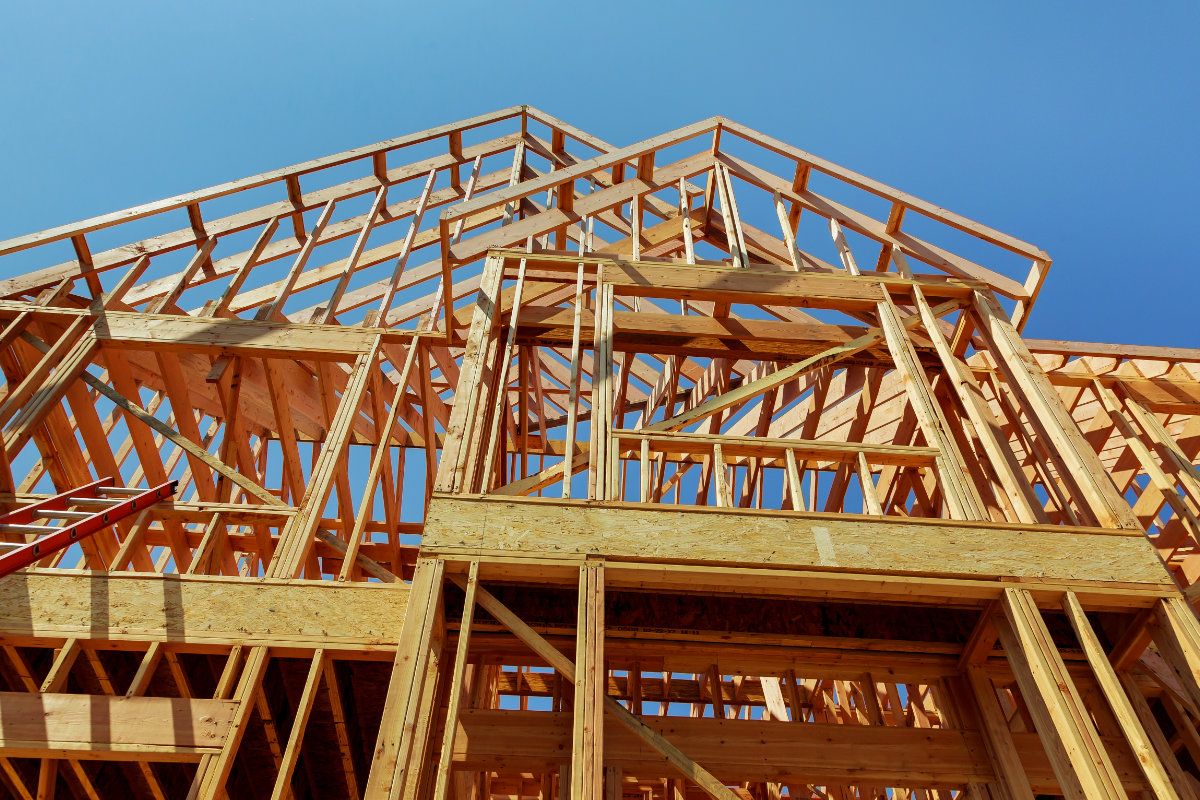
After centuries of construction using brick or concrete, wood is making a triumphant comeback as an eco-friendly material—climate-friendly, renewable, beneficial to residents’ well-being, and offering wonderful architectural possibilities.

A company that chooses to construct buildings using certified wood contributes to curbing dangerous climate change, as its operations result in a significantly smaller carbon footprint than traditional construction. Why?

  • Wood retains the carbon compounds it has absorbed until it is disposed of (burned), and the more trees that are grown for construction purposes, the more CO2 will be captured from the atmosphere.
  • The production and processing of standard building materials (e.g., concrete) involve high CO2 emissions, while wood processing requires relatively little energy. The same applies to the recycling of these materials.
  • Wood is a renewable resource, unlike the materials needed to produce concrete or plastic. Thus, timber construction conserves non-renewable resources.
  • In the case of standard building materials, post-production waste and materials left over from building demolition pollute the environment. Wood is completely harmless in this regard. Furthermore, it does not require disposal, as it can be reused.

The Benefits of Using Certified Wood in Construction

FSC-certified wood is an eco-friendly material, making it a worthwhile choice for the sake of the Earth’s future. Above all, however, it is an excellent material for building durable, yet comfortable and cozy homes.

Wooden buildings have always been perceived as conducive to well-being and health. It turns out, however, that this is not merely a subjective feeling on the part of their occupants.

  • Wood provides significantly better insulation than concrete on cold days and easier ventilation during hot weather.
  • Thanks to its ability to naturally regulate indoor humidity, wooden buildings have a more pleasant and healthier microclimate.
  • The elasticity of wood makes buildings constructed from it more resistant to damage, settling, or tectonic shocks than structures made of concrete or brick.
  • Structures made from the right type of wood are less susceptible to weather conditions (e.g., erosion) than concrete ones.

For construction companies, wood’s thermal properties can be a particular advantage. Building codes are becoming increasingly strict regarding the energy efficiency and thermal performance of new structures. Wood is an excellent material for building low-carbon homes that also offer high thermal comfort. Using FSC-certified wood is therefore a good way to meet current legal requirements.


Read other posts

TISAX – without this certification, you won’t get a foot in the door of the automotive industry. What do you need to know?

TISAX – without this certification, you won’t get a foot in the door of the automotive industry. What do you need to know?

For years, the automotive industry has been one of the most demanding sectors when it comes to quality and safety standards. read more
A laboratory without ISO/IEC 17025 accreditation loses contracts before it even has a chance to submit a bid

A laboratory without ISO/IEC 17025 accreditation loses contracts before it even has a chance to submit a bid

The laboratory services market is changing faster than most laboratories realise. Just a few years ago, ISO/IEC 17025 accreditation was a distinguishing feature – proof of exceptional quality that opened doors to the most demanding clients. read more
EUDR and the furniture and timber industry – why your international customers will soon be asking for documents you don’t yet have

EUDR and the furniture and timber industry – why your international customers will soon be asking for documents you don’t yet have

Poland is one of Europe’s largest furniture exporters. Polish timber and timber products are sold across the EU. read more
More posts