
787 974 136

Among companies that take the steel structures market seriously, a combination of two certifications – EN 1090 and ISO 3834 – is becoming increasingly common. Not because anyone has told them they must have both, but because the market has come to expect it – and companies that understand this are winning contracts that others are not eligible for.
EN 1090 regulates the entire process of manufacturing steel and aluminium structures – from materials, through welding and assembly, to quality control of the finished product and CE marking. It is a standard that covers the facility as a whole.
ISO 3834 is a standard concerning quality requirements for the welding of metallic materials. It focuses exclusively on the welding process – personnel qualifications, process supervision, weld inspection and welding documentation. It operates at three levels of requirements: basic (ISO 3834-4), standard (ISO 3834-3) and comprehensive (ISO 3834-2).
At first glance, it might seem that EN 1090 incorporates welding requirements and that ISO 3834 is superfluous. In reality, this is not the case: EN 1090 refers to ISO 3834 as the base standard for welding quality requirements. A manufacturer operating in higher execution classes (EXC3, EXC4) must demonstrate compliance with ISO 3834-2. Holding an ISO 3834 certificate is therefore not only good practice – in many cases, it is a technical requirement for EN 1090 certification at a higher level.
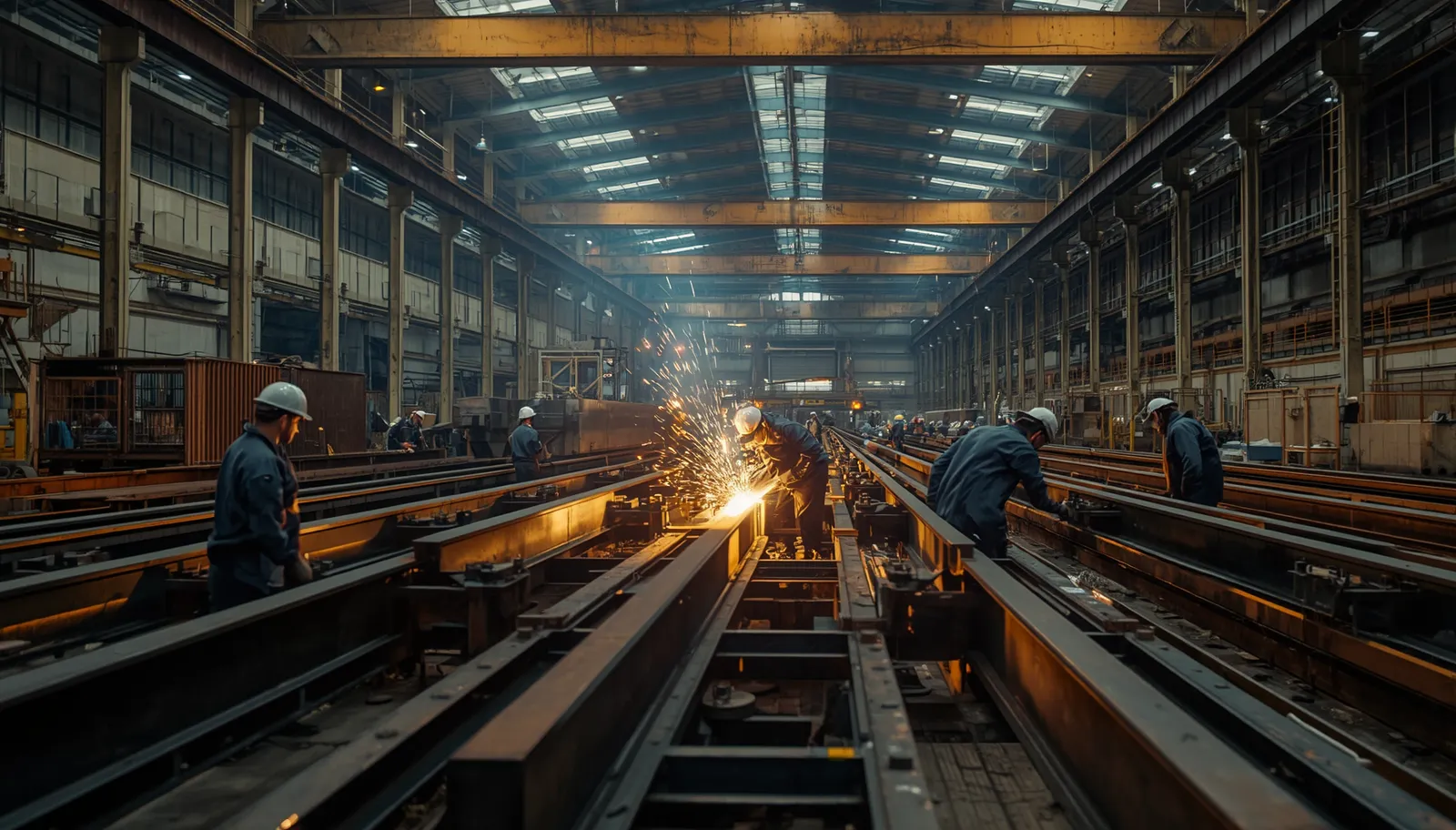
A main contractor responsible for an infrastructure contract is not looking for a subcontractor who simply ‘welds somehow’. They are looking for a partner who can provide full documentation of welders’ qualifications, welding procedures (WPQR/WPS) and a certificate confirming that their welding processes meet specific quality requirements.
ISO 3834 provides such confirmation – certified by an independent body, verifiable and unambiguous. For clients in the energy, petrochemical, lifting and infrastructure sectors, ISO 3834 certification is just as important a criterion for supplier qualification as EN 1090.
In practice, a company holding both certificates:
Good news for companies considering both certificates: EN 1090 and ISO 3834 have such similar scopes of requirements regarding welding that implementing them as part of a single project is far more efficient than carrying them out sequentially.
Documentation systems, welder qualification procedures and welding process supervision can be shared between both standards. Instead of two separate sets of documents – a single, coherent welding system that meets the requirements of both standards simultaneously.
For companies planning to implement EN 1090 from scratch, this is a compelling reason to plan the scope to include implementation of ISO 3834 from the outset – as the cost of extending the scope during the initial implementation is a fraction of the cost of adding a second certificate later as a separate project.


DJB DORADZTWO
Marcin Chorąży


