
787 974 136
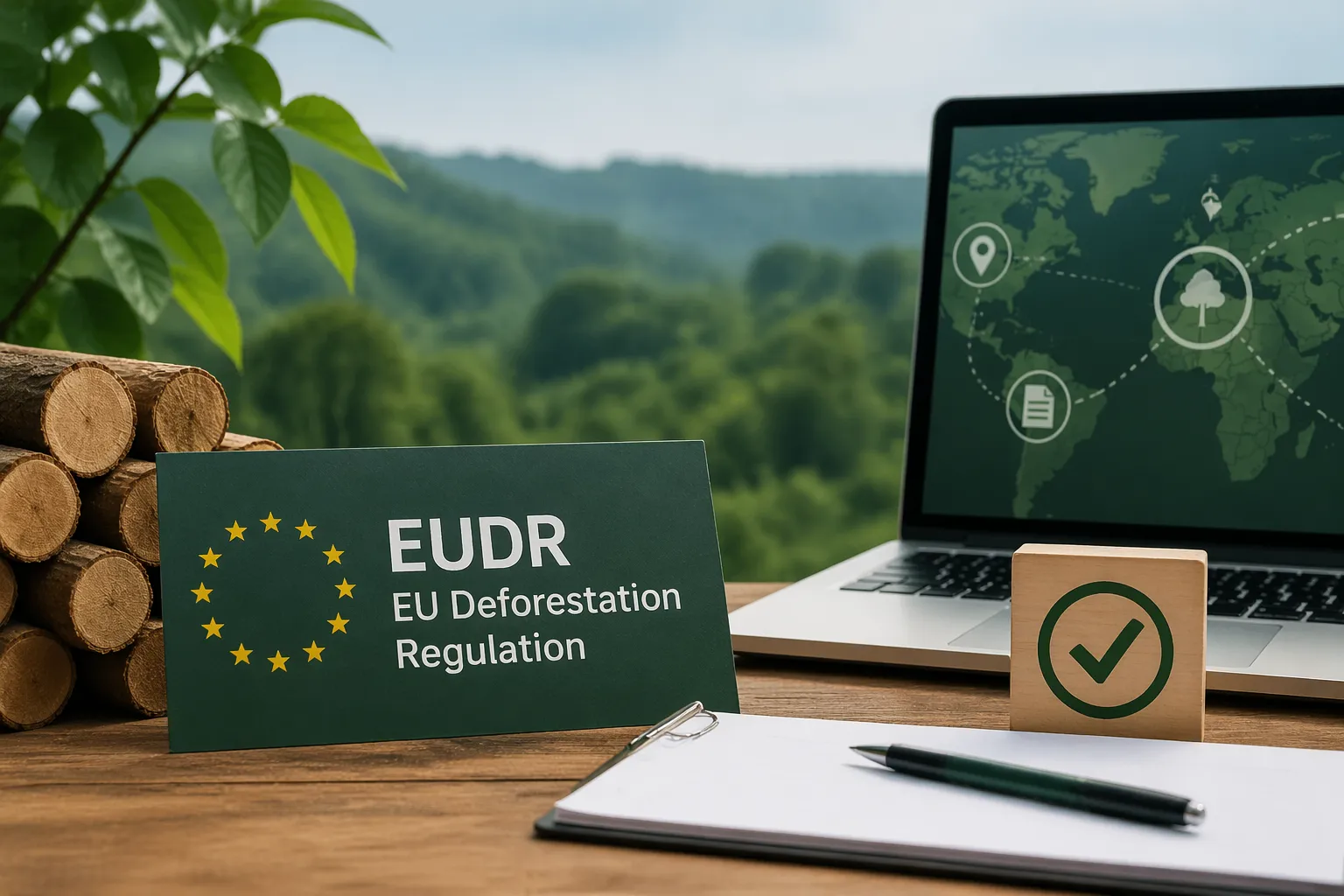
The EUDR (EU Deforestation Regulation) is one of the key changes in the EU’s approach to international trade. Its main aim is to reduce deforestation by ensuring that products placed on the EU market do not contribute to forest degradation.
In practice, this means a significant expansion of obligations for businesses – particularly in terms of documenting the origin of goods and supply chain transparency. This is therefore not a cosmetic change, but a regulation that affects day-to-day procurement, logistics and compliance processes within companies.
The provisions of the EUDR will be implemented in stages, taking into account the size of businesses. The largest organisations will be required to comply first, whilst smaller firms will be given additional time to adapt.
The key deadlines are currently as follows:
The regulation covers a very broad range of market participants. It applies not only to importers of raw materials from outside the EU, but also to manufacturers operating within the EU and distributors placing goods on the market.
It is worth emphasising that liability is not a ‘one-off’ obligation nor is it limited to the first importer. Any entity in the supply chain may be required to demonstrate that a product complies with the EUDR. This means that a lack of compliance at any one stage can bring the entire sales chain to a standstill. If you would like to better understand the principles behind the new regulations, please also read our article on the EU Deforestation-Free Products Regulation.
The biggest change introduced by the EUDR is the requirement to ensure full product traceability. Businesses will need to hold detailed information on the origin of raw materials, often going as far as the specific production site.
This means that standard supplier declarations are no longer sufficient. Companies will have to actively collect, verify and store data that will enable them to demonstrate compliance with the regulations.
In practice, the EUDR necessitates a change in approach to supply chain management. It is not only ‘what we buy’ that becomes crucial, but also ‘where exactly the product comes from and whether its manufacture complied with the regulations’. For many companies, this will mean having to implement new procedures, IT systems and more detailed cooperation with suppliers.
At the same time, the EUDR introduces an obligation to submit due diligence statements, which formalises the trader’s responsibility for the compliance of goods even before they are placed on the EU market.

The EUDR has a tangible impact on how supply chains operate and necessitates much greater control over the origin of products. This is not merely a formal obligation – in practice, it changes day-to-day processes within companies, from procurement through logistics to the management of supplier data.
In many sectors, this means having to obtain information that was not previously collected as a matter of course. For example, an importer of agricultural or timber raw materials will not only need to know which country the goods come from, but also hold data enabling the identification of the specific place of production. This may require restructuring cooperation with suppliers and implementing new tools for collecting and verifying data.
Preparing in advance allows the requirements to be implemented in a calm and organised manner – without time pressure or the risk of disruption to day-to-day operations. Companies that begin the process of mapping their supply chain well in advance can gradually fill information gaps and adapt their procedures.
Conversely, a lack of preparatory measures may lead to real operational problems, such as deliveries being held up at the EU border, an inability to prove product compliance, or delays in fulfilling commercial contracts. As a result, this may directly translate into difficulties in selling on the EU market and the risk of losing some customers.
Companies that take action early on will gain a competitive advantage. Find out how to prepare your company for the EUDR requirements.



DJB DORADZTWO
Marcin Chorąży


