
787 974 136

Polish welding companies have one of the best reputations in Europe when it comes to workmanship and value for money. And yet many of them hit a glass ceiling when trying to enter Western European markets or secure a contract with an international client. The reason is rarely the quality of the weld. More often than not, it is the lack of a single document: ISO 3834.
Germany, the Netherlands, Scandinavia, the UK – these are markets where welding quality is assessed not on the basis of samples or site visits, but on the basis of systems and documentation. Western clients do not have the time or resources to verify every supplier from scratch. That is why they use a shortcut: do you have ISO 3834?
If the answer is ‘no’ – the conversation usually ends there. Not because the company is bad. But because without the certificate, the client cannot classify it as a verified supplier within their own procedures. This isn’t a whim – it’s the system.
ISO 3834 is the language spoken by international supply chains. Without it, a welding company remains out of the conversation, regardless of its actual capabilities.
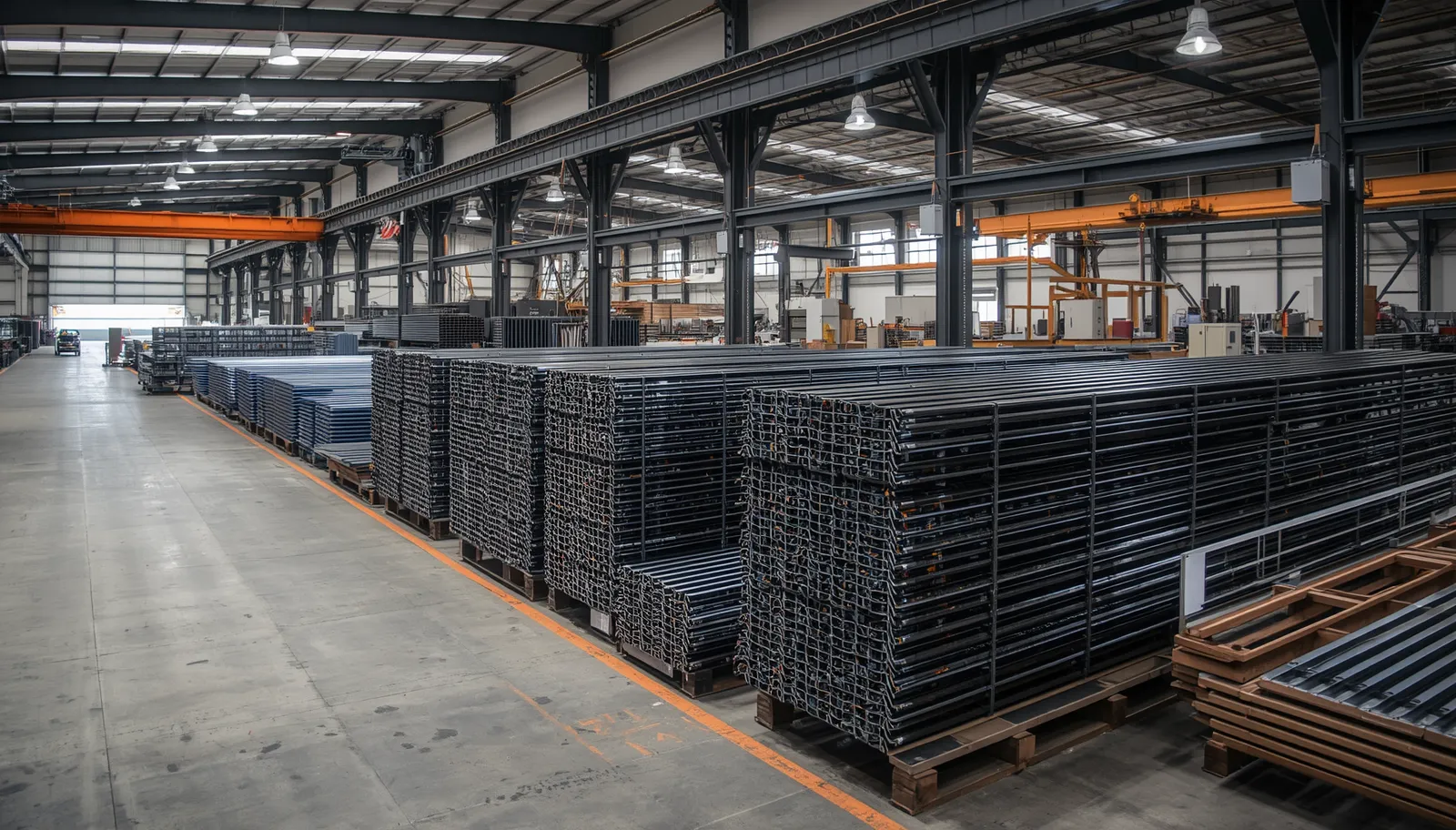
ISO 3834 certification is not an abstract requirement. It is explicitly mentioned in technical specifications and contract terms in very specific sectors:
In Western markets, ISO 3834 not only opens doors—it also changes your position at the negotiating table. A company that holds the certification is not treated as just another low-cost supplier from the East. It is treated as a proven technical partner—one with whom it pays to maintain a long-term relationship.
This translation is measurable: higher unit prices, longer framework contracts, and less pressure to constantly lower prices. A Western client who has qualified a supplier for their database does not change them with every tender—qualification costs them time and money, so they ensure the relationship is long-lasting.
✓ Companies with ISO 3834 certification that have entered Western European markets often find that margins on these contracts are higher than on the domestic market—with comparable effort.
Exporting doesn’t start immediately with direct contacts with Western customers. Often, the first step is to enter the supply chain of a Polish exporter—a company that sells abroad itself and is looking for welding subcontractors. Here, too, ISO 3834 is increasingly appearing as a requirement, because the exporter passes on the requirements of its Western customers to its subcontractors.
For a Polish welding company with no export ambitions, it may therefore turn out that ISO 3834 is already necessary when expanding cooperation with a domestic partner—who has been required to comply by their own client in Germany. ISO 3834 is increasingly becoming a deciding factor in whether a company will be invited to negotiate with demanding clients. Find out how we prepare businesses to meet the requirements of the standard and the certification process.


DJB DORADZTWO
Marcin Chorąży


