
787 974 136

Most companies that start thinking about AQAP certification already have ISO 9001. And almost all of them ask the same question: since we already have a quality management system, how much extra work does AQAP require? It’s a good question — and the good news is that having ISO 9001 really does make a difference. But the true value of this combination is revealed not during implementation, but when the company sits down to discuss a contract.
The relationship between ISO 9001 and AQAP is no coincidence — the AQAP standard was designed as an extension and complement to ISO 9001, not as an alternative. This means that a company implementing AQAP is not building a system from scratch. It builds on what it already has — supplementing it with requirements specific to the defence sector.
In practice, a company with ISO 9001 already has quality management processes, documentation, internal audits and management reviews in place. AQAP adds to this, among other things, requirements regarding GQA government oversight, an expanded approach to product traceability, more rigorous production risk management, and detailed documentation requirements specific to the defence industry.
This means that the path to AQAP is shorter for companies with ISO 9001 certification — but also that the combination of both certificates creates a system that is more than the sum of its parts. For more information, see the article ‘What is the AQAP standard and who does it apply to?’.
A military contracting authority or the prime contractor for a defence contract evaluating a potential supplier does not look at the certificates in isolation. They look at the bigger picture: is this company capable of delivering a high-quality product, documenting every stage of its production, and meeting the quality control requirements imposed by the contract?
A company with ISO 9001 alone sends a signal: we have a proven quality management system in the commercial sector. A company with both ISO 9001 and AQAP sends a different and stronger signal: we have a quality management system that has been verified against NATO defence requirements. We are ready for government oversight, rigorous audits and the documentation requirements characteristic of military contracts.
In an environment where trust in a supplier is built up over many years, and where the cost of error is incomparably higher than in the civilian sector, AQAP opens up access to the military market and NATO contracts for many companies; this is why this factor carries significant weight when selecting a partner.
In an environment where trust in a supplier is built up over years, and the cost of error is incomparably higher than in the civilian sector, this signal carries significant weight when selecting a partner.
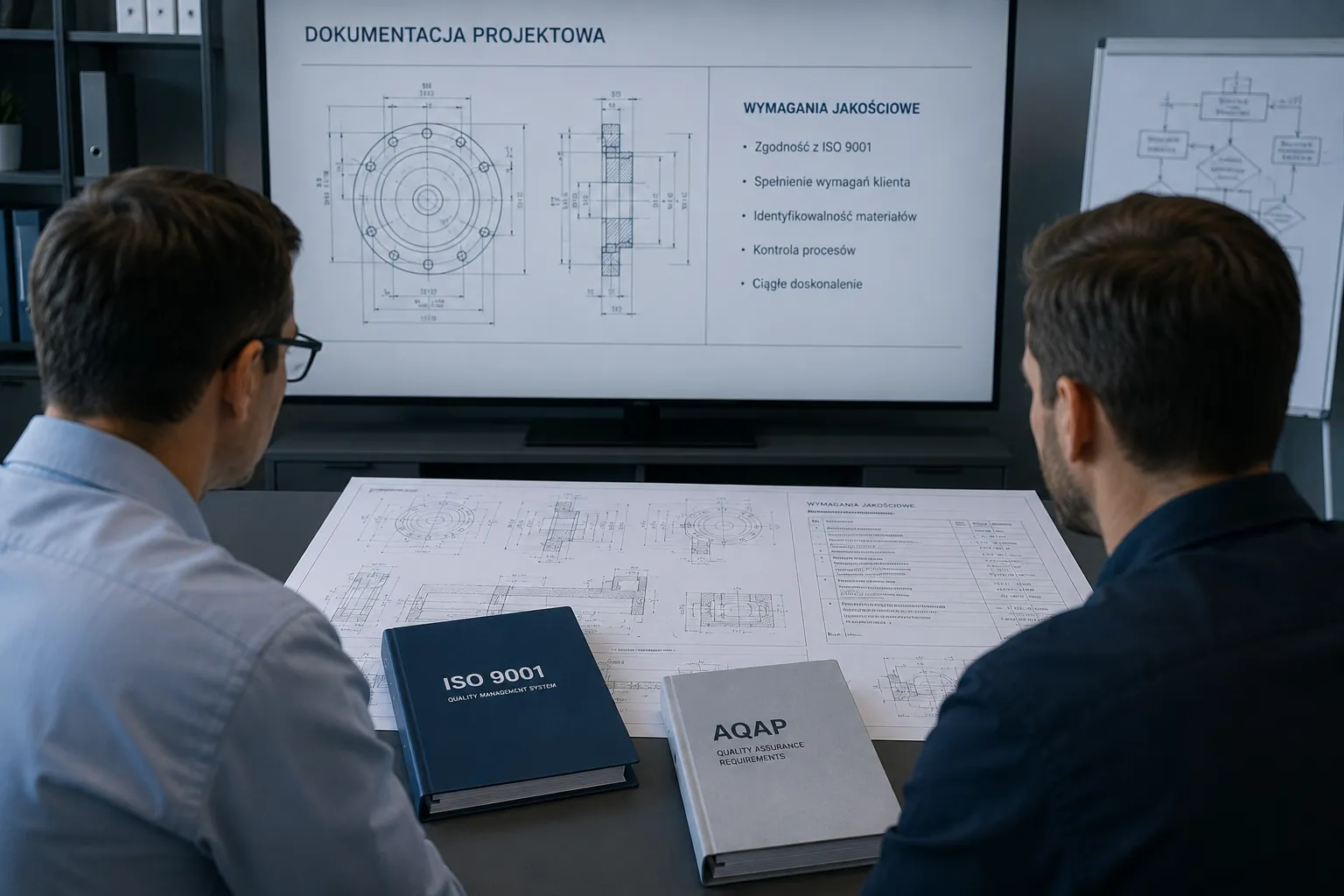
Companies that hold both ISO 9001 and AQAP certification rarely regard this as a coincidence. It is the result of a conscious decision to diversify their markets. ISO 9001 opens the door to commercial customers requiring a documented quality management system. AQAP opens the door to defence customers, who will not enter into a relationship with a supplier at all without this certification.
Combining both means that the company is not dependent on a single market segment. When commercial orders decline, the defence portfolio stabilises revenues. When defence budgets increase, as has been the case in Poland and across Europe in recent years, the company is ready to tap into them without having to go through a lengthy qualification process.
This approach is particularly valuable for manufacturing and service companies operating in sectors that naturally border on defence: electronics, precision engineering, logistics, IT, and the manufacture of clothing and equipment. Together, ISO 9001 and AQAP certifications create a supplier profile ready to meet the requirements of both the civilian and military markets.
The answer depends on where the company sees its future growth. If the defence market — whether domestic or NATO — is part of the plan for the coming years, AQAP is an investment with a tangible return: access to a procurement segment that remains off-limits without certification.
More good news: a company with ISO 9001 has already done much of the groundwork. The gap between what it already has and what AQAP requires can be assessed — and often turns out to be smaller than expected.
If your organisation is considering entering the defence market or wishes to improve its chances in tenders, find out how we can help you obtain AQAP certification.



DJB DORADZTWO
Marcin Chorąży


