
787 974 136
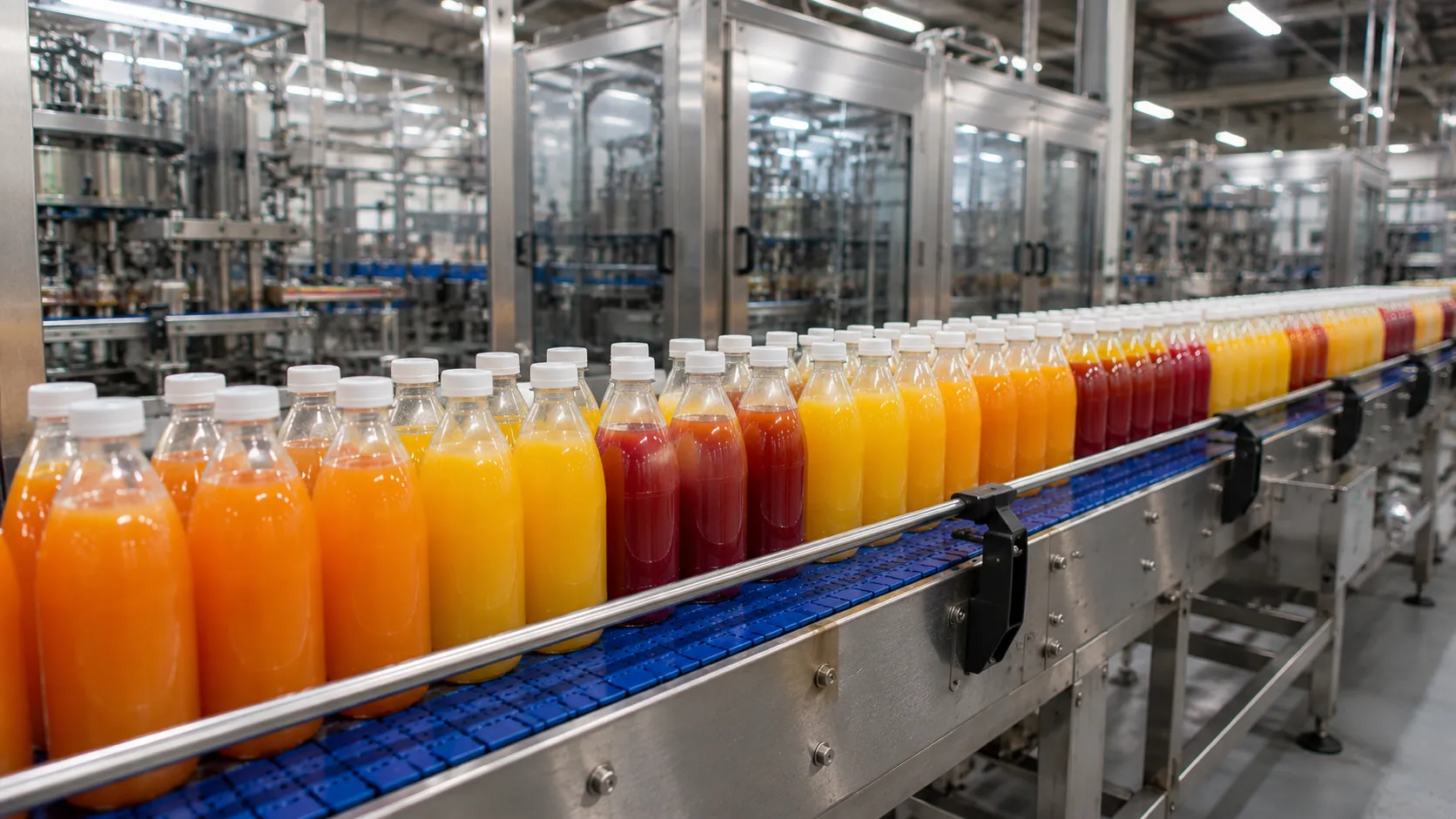
In many food production facilities, a food safety system exists in theory, but in practice its effectiveness can be inconsistent. Procedures are documented, audits are carried out, and records are kept – yet problems persist in the same areas: at the interface between supply, production and information flow.
This is not an exception, but rather a typical picture of the industry. Research on food safety management systems indicates that the implementation of certified standards, such as FSSC 22000, leads to a measurable improvement in process control and a reduction in quality non-conformities in manufacturing companies. Comparative analyses of FSMS show a decrease in the number of incidents following system implementation, particularly in areas related to production and the supply chain.
At the same time, the scale of implementations shows that this is not a niche approach. There are already over 40,000 ISO 22000 certificates and related systems in operation worldwide, and this number is constantly growing, demonstrating the increasing importance of structured food safety systems in the global food industry. In practice, however, certification alone does not eliminate operational risks. FSSC 22000 is only effective if a company maintains consistency across three key areas where loss of control most frequently occurs.
One of the most frequently underestimated areas in manufacturing plants is supplier control. Even a well-designed quality system will not function effectively if the incoming raw materials do not meet requirements or if their quality is inconsistent.
In practice, companies often rely on declarations, certificates and their history of working with a supplier, assuming that the risk is minimal. Yet it is precisely at the supply stage that the first non-conformities arise – variations between batches of raw materials, incomplete traceability, changes in subcontractors or a failure to update documentation.
FSSC 22000 requires a systematic approach to assessing suppliers and monitoring their reliability. A well-functioning system is not just about approving the source of raw materials, but about continuously checking whether the terms of cooperation are changing in a way that affects food safety. Organisations that fail to monitor this often only discover a problem once the end product reaches the customer. It is precisely this comprehensive approach that makes FSSC 22000 the standard required today by many large retail chains and international food manufacturers, rather than merely an extension of the HACCP system.

The greatest challenges in maintaining system stability arise on the production floor. It is here that procedures come up against time pressures, productivity demands and the day-to-day decisions of operators. Even the best-designed system can lose its effectiveness if it is not consistently applied in practice.
Typical problems arise in areas such as cleaning and disinfection, changes to process parameters, uncontrolled line changeovers, or short-cutting procedures under production pressure. Each of these deviations may seem insignificant, but in the long term it affects the stability of the entire food safety system.
FSSC 22000 places great emphasis on the consistency of operational activities and their documentation, but the system’s real effectiveness depends on whether staff understand the importance of the procedures and apply them consistently. In practice, it is the level of operational discipline that determines whether the system operates merely on paper or actually protects the product.
The third area where companies often lose control over food safety is information management. System documentation, production records and inter-departmental communication form the foundation of the entire system, but at the same time represent one of the organisation’s most vulnerable points.
Problems arise when information is not updated in real time, document versions differ between departments, or operational decisions are not properly recorded. In such situations, a company may formally have all the required procedures in place, but in practice be using out-of-date data or incomplete information.
FSSC 22000 requires the management system to be consistent, yet in the day-to-day running of the facility, it is communication between production, quality, warehousing and procurement that determines whether the system operates smoothly. A lack of smooth information flow leads to situations where different parts of the organisation make decisions based on different data. As a result, even a well-designed system can lose its effectiveness, not because it is poorly constructed, but because it is not consistently maintained in day-to-day operations. A well-maintained FSSC 22000 system not only improves food safety, but can also simplify cooperation with customers by reducing the number of audits carried out by individual clients.



DJB DORADZTWO
Marcin Chorąży


