
787 974 136

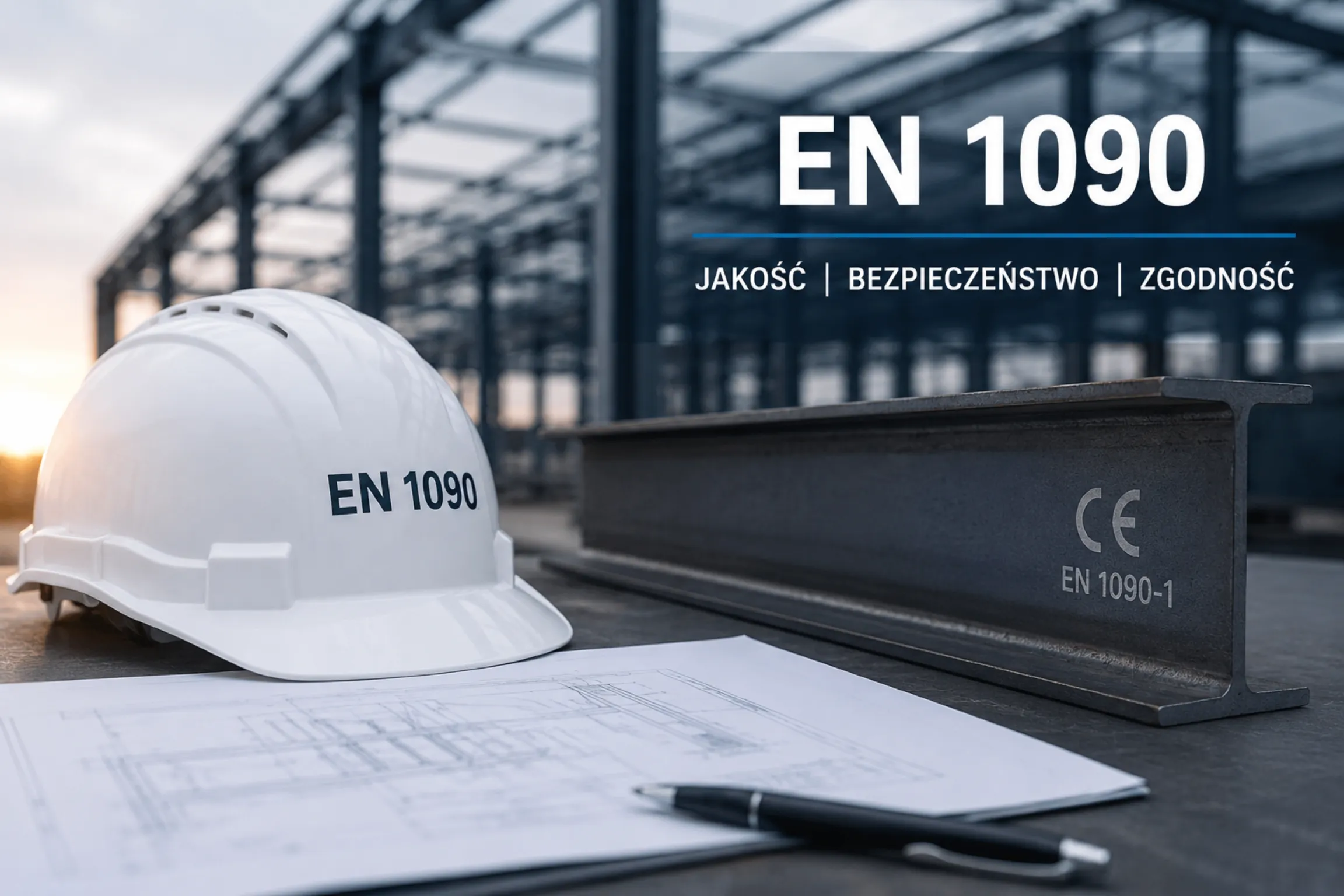
For many companies, EN 1090 is still treated as a mandatory document required to affix the CE marking. The certificate is in place, the audit has been passed, case closed. Except that the market has long since ceased to view EN 1090 solely in this way. Today, for many investors, main contractors and industrial clients, the certificate has become the first filter when selecting a supplier of steel structures. And that is precisely why some companies continue to compete solely on the price per tonne of steel, whilst others regularly secure larger, more stable and more profitable projects.
Large-scale projects involve significant risks. Delays, complaints or quality issues can cost the client hundreds of thousands of zlotys. That is why companies responsible for investment projects are scrutinising more closely who they entrust with the construction work.
EN 1090 is no longer just an ‘add-on’. For many clients, it confirms that the manufacturer:
And that is precisely why companies with a well-implemented system are much more likely to be approached for quotations regarding industrial halls, infrastructure, the energy sector or large-scale manufacturing projects.
Many companies hold EN 1090 certification but fail to exploit its business potential. The certificate serves solely as a document to be presented during an audit or a client inspection. Meanwhile, companies that genuinely develop their quality management system begin to appear quite differently in the eyes of the market. They have well-organised production, better control over documentation, greater predictability in delivery and a lower risk of errors. And this translates directly into customer trust. Major contractors very quickly notice the difference between a company that ‘has the paperwork’ and one that actually operates in accordance with quality standards.

In many sectors, certification no longer gives a competitive edge. It has simply become a prerequisite for entering the market. Companies without the appropriate scope of EN 1090 certification are increasingly being eliminated at the supplier verification stage. Even if they have manufacturing experience and competitive prices.
Customers want to minimise risk. They prefer to work with a manufacturer who can document their processes, has qualified staff and is prepared to meet the project’s requirements without organisational chaos. And that is precisely why a well-implemented EN 1090 certification very often marks the start of moving up to a higher level in the market.
Companies that treat EN 1090 purely as an obligation usually focus on ‘passing the audit’.
Companies that use the system strategically view it differently:
And it is precisely these companies that most often stop competing solely on price.
→ A well-implemented EN 1090 is not just a certificate. For many companies, it marks the moment when they begin to be seen as a partner for large and demanding projects.


DJB DORADZTWO
Marcin Chorąży


