
787 974 136
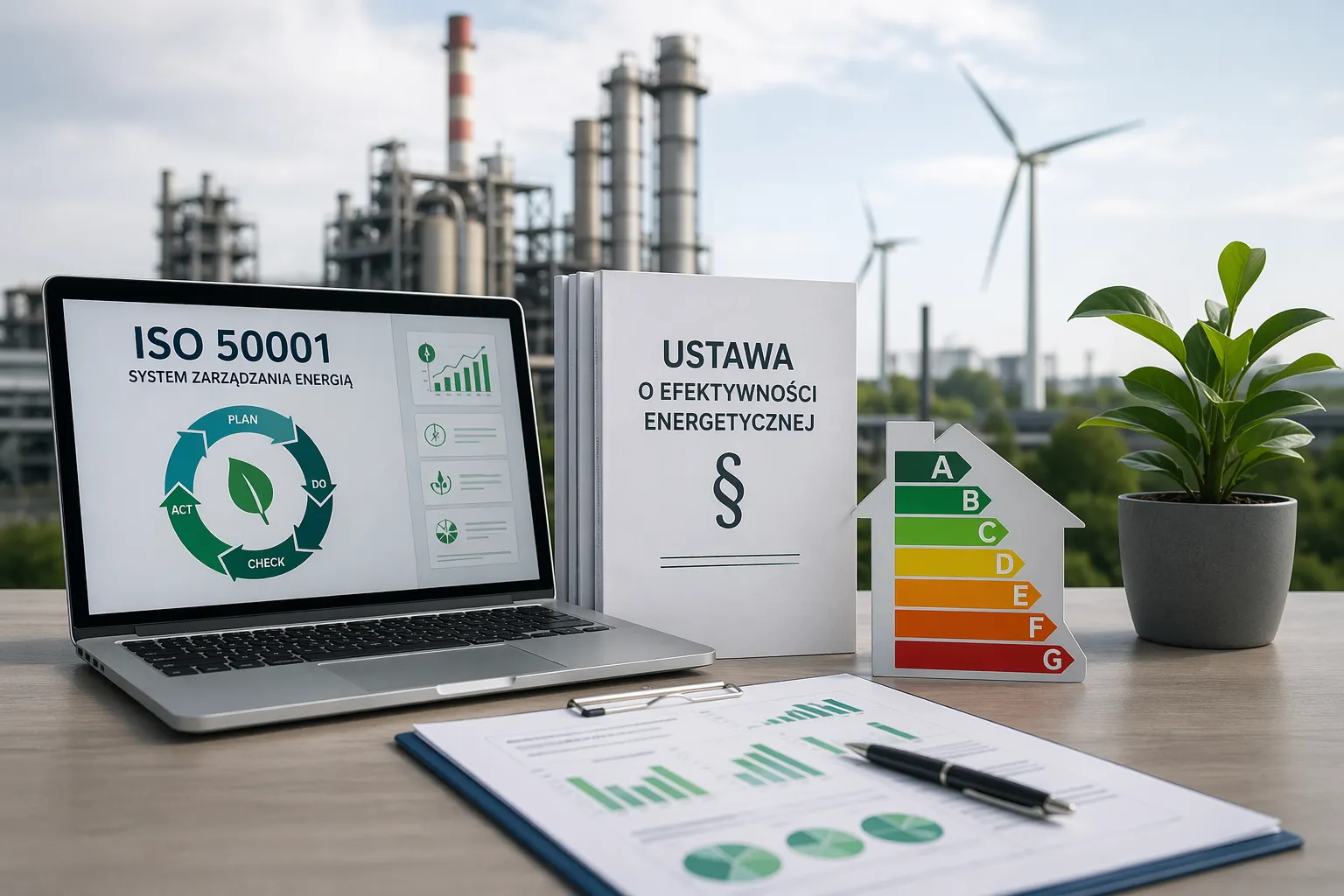
Rising energy costs and regulatory requirements mean that companies are increasingly having to view energy not just as a cost, but as an area requiring conscious management. It is in this context that the ISO 50001 standard comes into play, providing a structured approach to energy efficiency and enabling organisations to have a real impact on their energy consumption.
ISO 50001 is an international standard developed by the International Organisation for Standardisation (ISO), setting out the requirements for an energy management system within organisations. It was published in 2011 and further developed in subsequent years, partly in response to rising energy costs and the EU’s climate targets. Its implementation is intended to support organisations in reducing energy consumption and improving efficiency in a measurable and repeatable manner.
The aim of the standard is to systematically reduce energy consumption, improve energy efficiency and achieve better control over operating costs. ISO 50001 does not impose specific technologies or savings thresholds – it focuses on management based on data, indicators and the analysis of energy consumption over time.
The standard is based on the PDCA (Plan–Do–Check–Act) cycle, which ensures continuity of action: planning energy targets, implementing them, monitoring results and making adjustments. In practice, this means moving away from one-off analyses towards a continuous optimisation process.

Implementation of the standard begins with an energy audit, which involves understanding where and how energy is consumed. On this basis, the organisation identifies significant energy use areas (SEUs) and defines energy performance indicators (EnPIs) to measure performance.
The next step is to set targets and plan the actions needed to achieve them. Monitoring is also a key element – the ongoing monitoring of energy consumption, which enables the rapid detection of anomalies and a response to deviations.
This allows the company to move from general data on invoices to specific information that supports operational and investment decision-making.
One of the most important elements of the system is the ITP, or Energy Improvement Action Plan. It is this plan that translates the analysis and objectives into specific actions.
The ITP sets out which initiatives will be implemented, who is responsible for them, what results are to be achieved, and how these will be measured. It may encompass both simple organisational improvements and more complex investment projects. Its role is crucial, as it is precisely thanks to the ITP that ISO 50001 ceases to be merely a set of requirements and becomes a tool for generating real savings and improving efficiency.
Organisations adopt ISO 50001 primarily to better control energy consumption and reduce costs. The system also enables them to make more informed investment decisions and prepare for changes in energy prices and regulatory requirements.
Furthermore, implementing the standard enhances a company’s credibility and supports the achievement of environmental objectives. The greatest value, however, lies not in the certificate itself, but in the shift in approach – from reactive cost management to conscious, data-driven energy management.
ISO 50001 provides a framework and tools, but it is how these are used that determines the results. That is why, for many companies, it is the first step towards real, sustainable savings and better control over one of the key costs of their operations.



DJB DORADZTWO
Marcin Chorąży


