
787 974 136

Environmentalism is in vogue – that’s a fact. But ISO 14001 is neither a PR trend nor a gesture to climate activists. It is, first and foremost, a business tool that has been helping companies for over three decades to actually earn more, spend less and avoid trouble. Below are five arguments that will convince even those whose interest in the natural environment is limited to what they see from their car window.
Public procurement in Poland and the EU increasingly includes environmental criteria as a condition for participation – not as an additional point in the assessment, but as formal requirements. The lack of an ISO 14001 certificate means a bid will be rejected even before its substantive assessment.
Large corporations and international supply chains operate in a similar way. Fortune 500 companies, which hold ISO 14001 certification themselves, also require it from their suppliers. For a Polish manufacturer or service provider wishing to enter the supply chain of a Western European corporation, environmental certification is increasingly seen as a ticket to entry – not a competitive advantage, but a prerequisite.
Companies without ISO 14001 certification are weeded out at the supplier qualification stage – before anyone even looks at their price, quality or references.
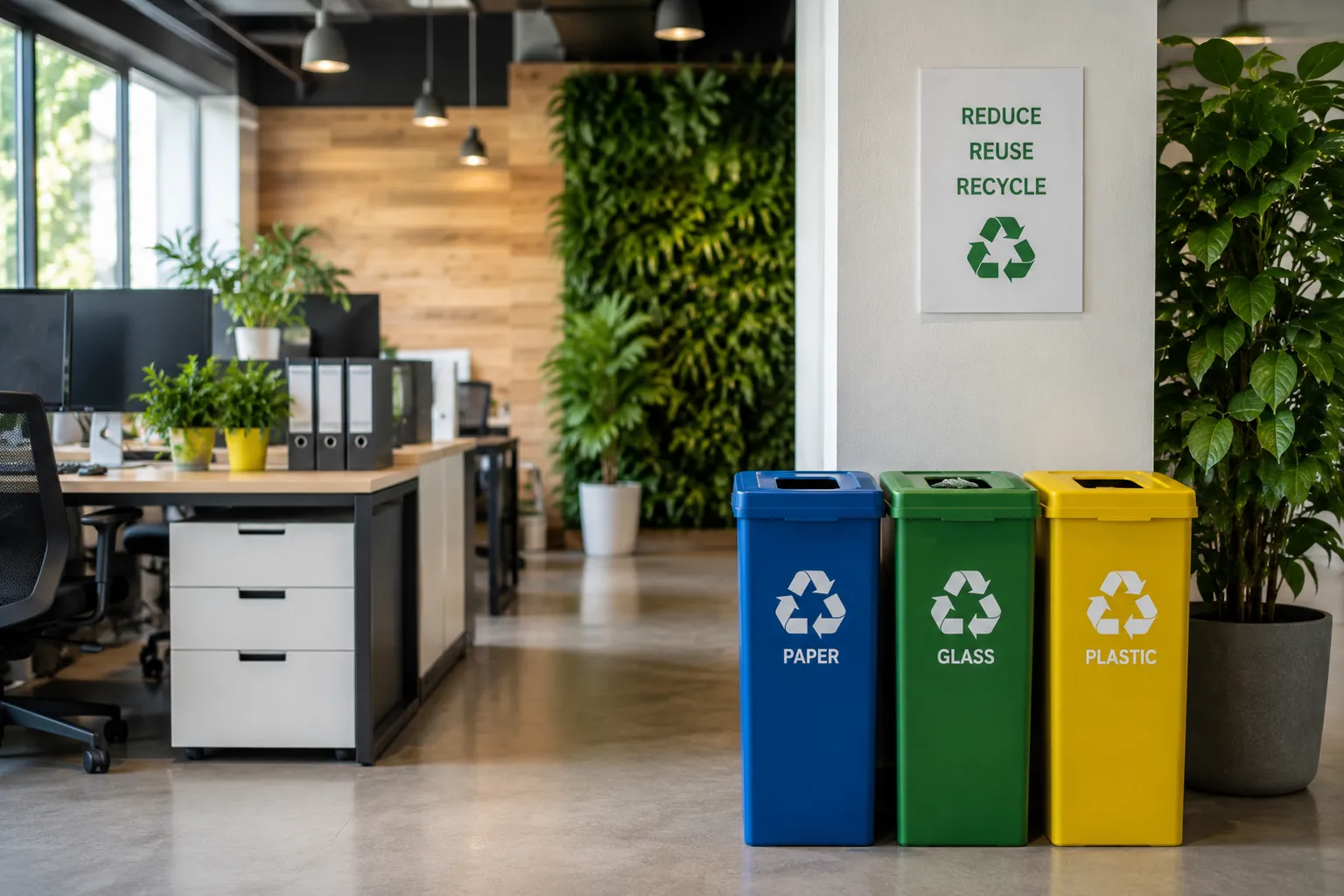
ISO 14001 requires the systematic monitoring of resource consumption: energy, water, materials and waste. In practice, companies that have operated for years without such a system discover, during implementation, instances of waste that no one had previously measured.
This is not theory. It is the result of the standard forcing organisations to measure what was not previously measured. And what is measured can be controlled and optimised.
✓ Operational savings often cover the cost of implementing ISO 14001 within the first year of the system’s operation.
Environmental law in the EU is constantly evolving. New regulations, directives and reporting requirements are introduced on a regular basis. A company that fails to keep track of these changes and does not have an environmental compliance management system in place usually only finds out about its new obligations when the inspector is already knocking on the door. Environmental management standards themselves are also evolving in a similar way. It is worth familiarising yourself now with the planned update to ISO 14001:2026 and the direction of the changes, which will affect organisations holding ISO 14001 certification.
ISO 14001 establishes an internal system for monitoring legal requirements and assessing compliance. The company knows at all times which regulations it is subject to, what limits apply to its operations and whether it is meeting them. This is not just protection against financial penalties – it is protection for business continuity.
An administrative fine for breaching environmental regulations can run into hundreds of thousands of zlotys. A suspension of operations costs even more.
You can declare your commitment to environmental responsibility on every page, in every presentation and at every opportunity. But today, customers, partners and the bank financing the company’s growth are looking for more than just declarations – they are looking for proof.
ISO 14001 certification provides such proof. It is issued by an independent certification body which has verified that the environmental management system actually works – not just exists on paper. For a business partner, this signals that the company is well-organised and predictable, and will not surprise them with a sudden regulatory issue that halts production or deliveries.
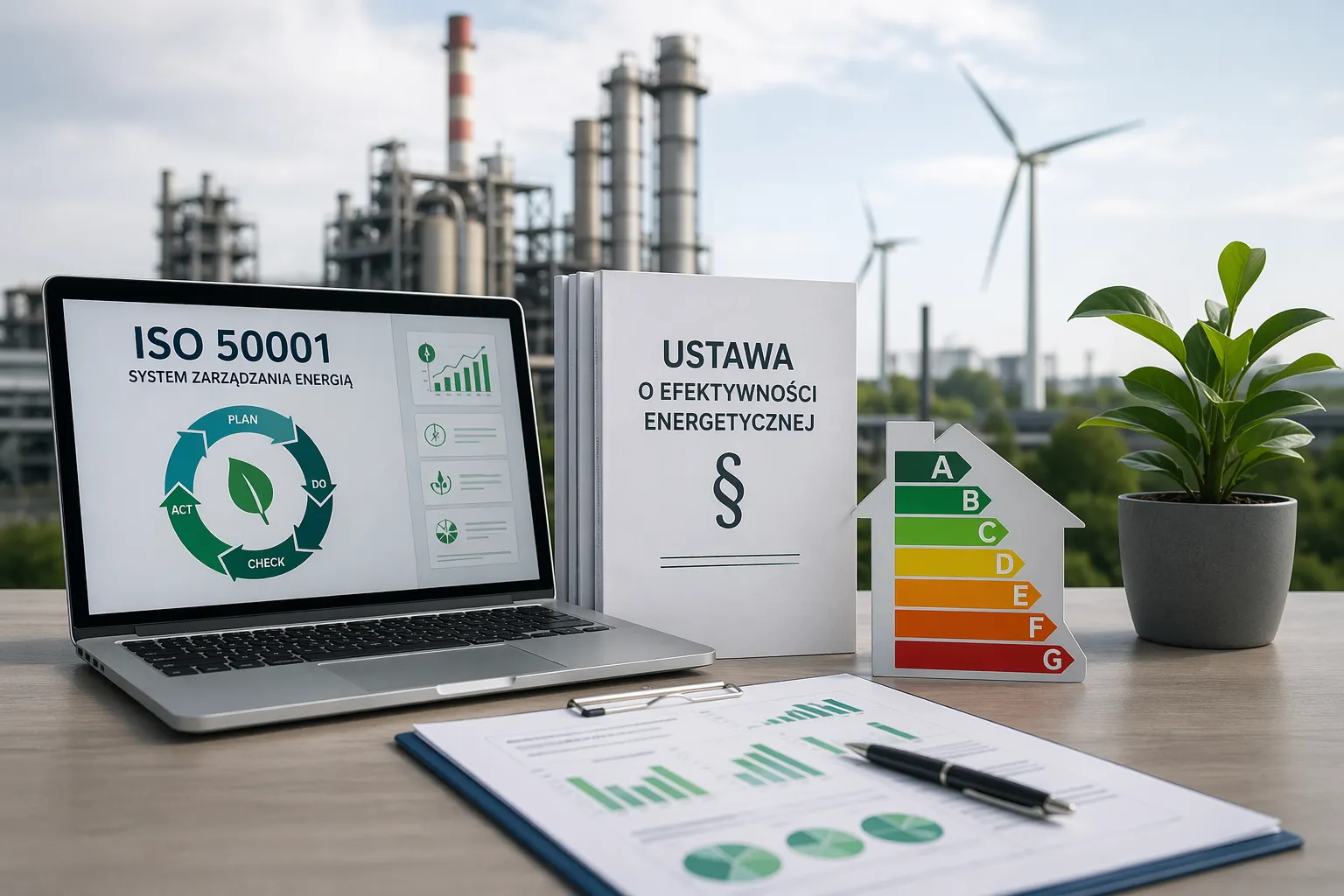
ISO 14001 does not operate in isolation. The standard is built on the same High-Level Structure (HLS) as ISO 9001, ISO 45001 and ISO 50001. A company that already holds ISO 14001 brings ready-made foundations to subsequent implementations: policy, objectives, internal audits, management review and continuous improvement.
For a company considering an integrated management system – covering quality, the environment and occupational health and safety – ISO 14001 is not an additional burden. It is an investment that pays dividends at every subsequent stage.

DJB DORADZTWO
Marcin Chorąży


