
787 974 136
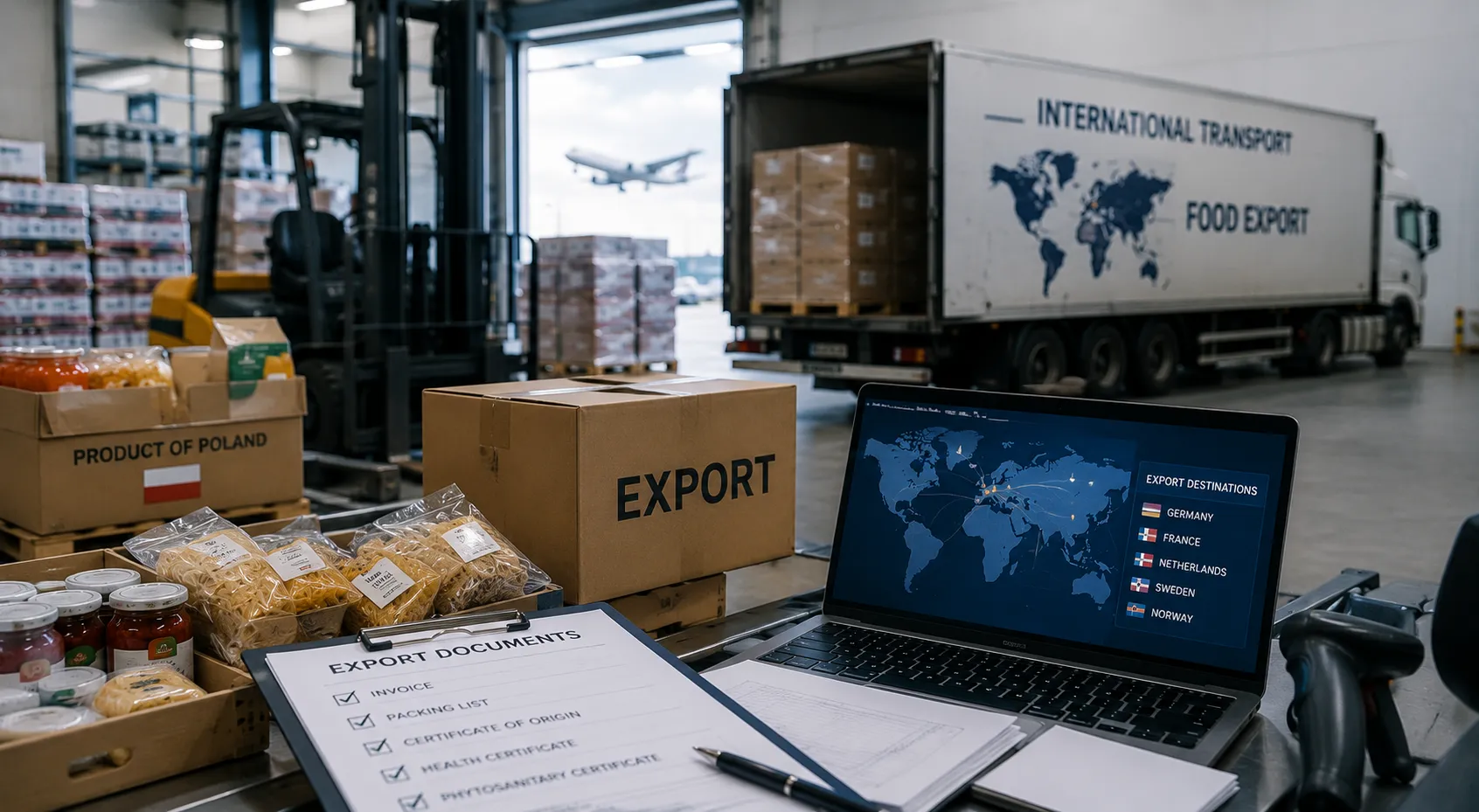
Poland exports food worth tens of billions of zlotys a year and has been among Europe’s leaders in this sector for years. Germany, France, the Netherlands and the Nordic countries are the main destinations for Polish food exports. And it is precisely in these markets that IFS Food is not just a certificate worth having. It is a prerequisite without which discussions with a retail chain will not even begin.
The IFS Food standard was created on the initiative of German and French retail chains, which needed a uniform tool for assessing food suppliers. Hence its dominance in Germany, France, Austria and the Benelux countries — these are markets where IFS is not so much preferred as required by most major players.
Chains such as Rewe, Edeka, Aldi, Lidl, Carrefour and E.Leclerc have their own procurement policies which require suppliers to hold certification recognised by the GFSI — the Global Food Safety Initiative. IFS Food meets this requirement. A manufacturer without GFSI certification — and IFS is one of the most widely recognised in Europe — is not considered as a potential supplier, regardless of the quality of their product.
Polish retail chains are increasingly requiring IFS certification from their suppliers themselves — but the level of pressure is still lower than in Western markets. A company that sells exclusively in Poland can operate without IFS certification, relying on HACCP and a good reputation. A company wishing to enter Rewe or Carrefour does not have that choice. In practice, manufacturers are often faced with a choice between the IFS and BRC schemes, which are equivalent standards recognised by retail chains.
The difference also lies in the approach to supplier verification. Western European retail chains have extensive quality departments that actively verify their suppliers’ certification — not just on the first contract, but with every renewal of the partnership. The loss of IFS certification by a Polish supplier means an automatic suspension of supplies until certification is restored. This is a risk that exporting companies take into account, and one that makes them treat the maintenance of certification with due seriousness.

Beyond direct cooperation with retail chains, IFS Food plays a significant role in discussions with importers and distributors who act as intermediaries in accessing foreign markets. A foreign food distributor that itself supplies retail chains with IFS requirements cannot afford to include a producer without certification in its portfolio. It would risk its own standing with its customers.
For a Polish producer planning to expand abroad, IFS Food is therefore an argument that works on two levels: it opens up direct access to retail chains and makes the company an attractive partner for distributors who themselves operate in a certified environment.
It is also worth remembering that in the Scandinavian markets, where food safety standards and requirements for suppliers are exceptionally stringent, IFS Food is often the entry point to further, more detailed requirements of local retail chains. A company with IFS certification is seen as a partner ready to meet these requirements. A company without certification is seen as a partner requiring too much verification work. That is why many companies choose to implement and obtain IFS Food certification with the support of specialist consultants.



DJB DORADZTWO
Marcin Chorąży


