
787 974 136
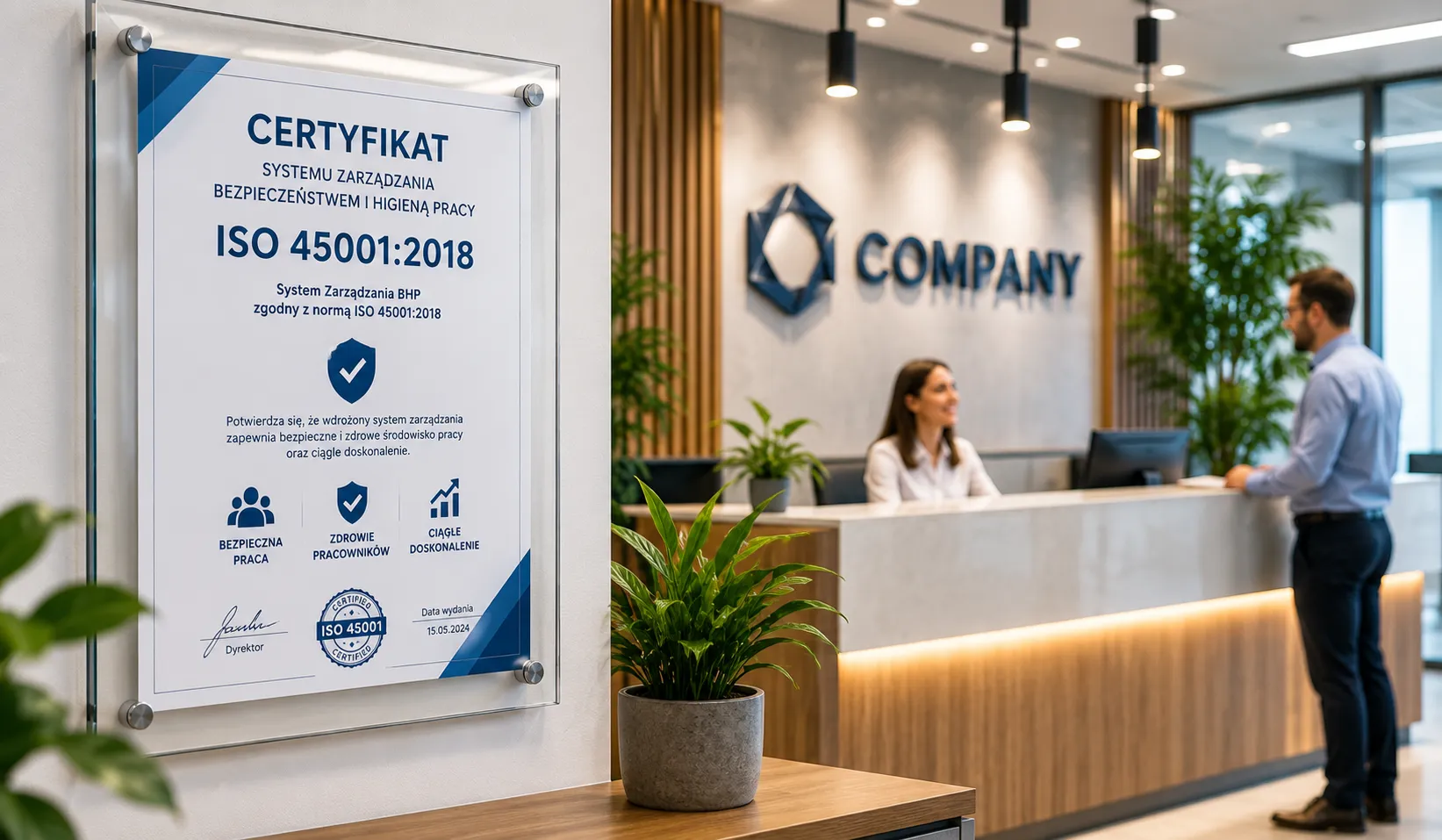
When it comes to ISO 45001, most discussions quickly turn to the standard’s requirements, documentation and audits. Less often is the fact that an OHS certificate is now one of the most concrete selling points when talking to a potential client. Not because it looks good on company letterhead – but because it opens doors that would otherwise remain closed.
For years, ISO 45001 was seen as a ‘nice-to-have’ in a company’s portfolio of certifications. Today, in many sectors, it has become a mandatory requirement. Corporations in the automotive, renewable energy, heavy industry and pharmaceutical sectors are increasingly using detailed supplier assessment questionnaires, in which occupational safety features as a separate section. Companies without a certified occupational health and safety management system simply do not pass the initial screening.
This is not a trend of the future. It is happening now, in Polish companies that are missing out on contracts before they even have a chance to submit a quote.
In public procurement, management system certificates have for years been a factor in the evaluation of bids. Contracting authorities may – and are increasingly doing so – award extra points for holding ISO 45001 certification, particularly in tenders for construction works, industrial services or supplies to the public sector.
Even if certification is not a formal requirement, the lack of it may mean losing out to a competitor that holds it – given similar prices and experience. In practice, ISO 45001 acts as a tiebreaker here: it is the deciding factor when other aspects of the bid are comparable.
It is also worth remembering that requirements in public tenders tend to become stricter, not more lenient. A certificate that is an asset today may be a requirement in two years’ time.

Companies that sell to large corporations or institutions know that the purchasing decision passes through many hands: the procurement department, compliance, and often the health and safety or ESG departments. Each of these departments applies its own verification criteria. ISO 45001 is a certification that appeals to each of them.
For the procurement department, it is proof of the supplier’s operational maturity. For compliance, it is confirmation that the partner manages risk responsibly. For the ESG department, it is an element of safety policy that is increasingly being included in non-financial reporting. Holding the certificate shortens the verification time and reduces the number of questions in the supplier qualification process. And that means faster inclusion on the list of approved partners.
Many companies view the ISO 45001 certificate solely as a tool for meeting formal requirements. Companies that get more out of it actively promote their certification: on their website, in tender documents, and in client presentations.
This isn’t bragging. It’s information that changes how potential business partners perceive the company. The certificate says: “we manage risk systematically, we have documented procedures, and we undergo independent audits”. In industries where occupational safety is crucial, this message builds trust faster than many an advertising brochure.



DJB DORADZTWO
Marcin Chorąży


