
787 974 136
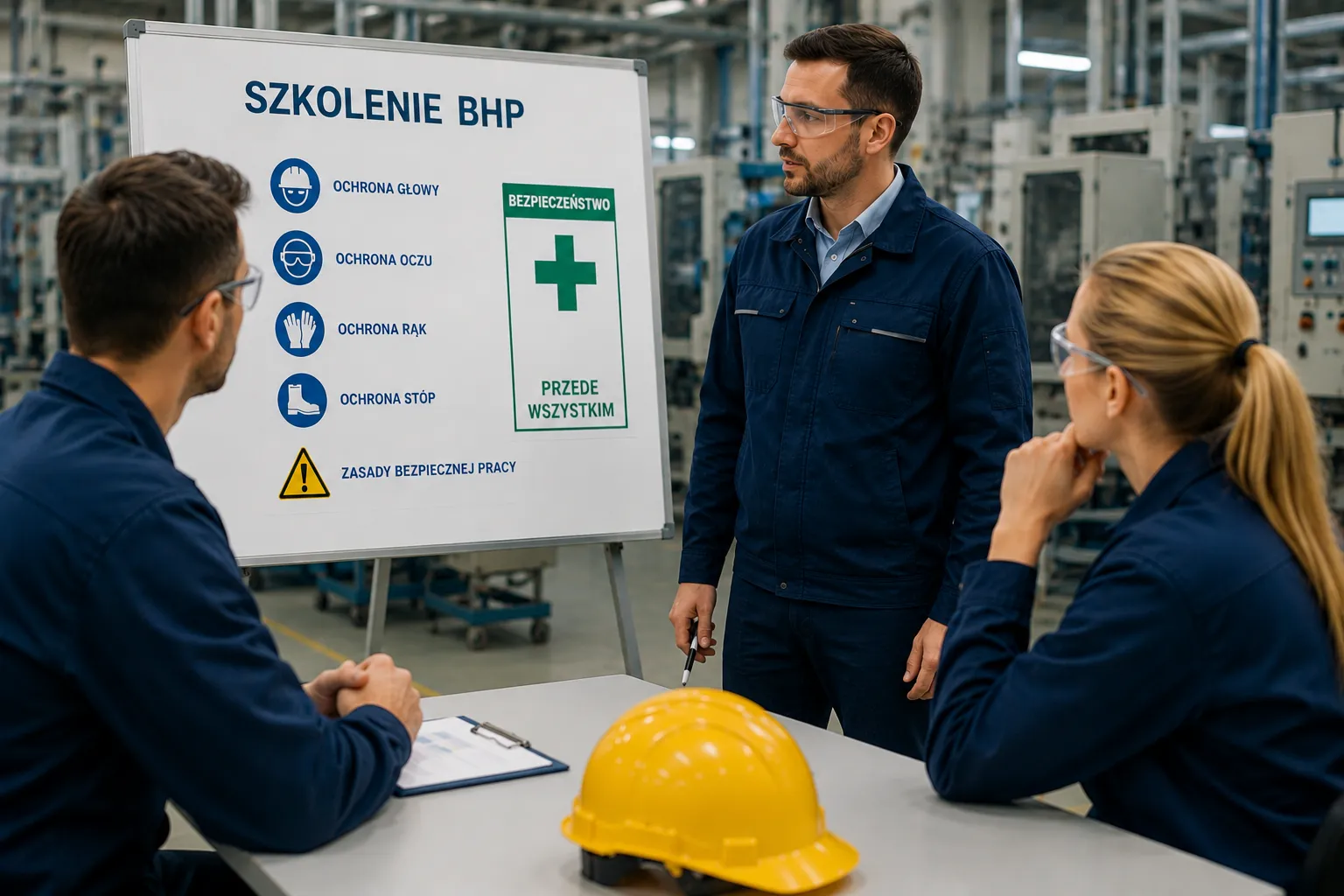
Most companies that have not yet decided to implement ISO 45001 view the lack of certification as a neutral situation. They don’t have the certificate – and nothing happens. The problem is that something is happening, it’s just not always immediately apparent. The costs of not having an occupational health and safety management system mount up gradually: through staff absences, lost tenders, higher insurance premiums and – in extreme cases – legal consequences following an accident. This article is not intended to scare you. It is an attempt to show how much it really costs to put off this decision.
Every accident at work generates both direct and indirect costs. The former are easier to quantify: compensation, medical expenses, any fines imposed by the National Labour Inspectorate, and higher accident insurance contributions to the Social Insurance Institution (ZUS). The latter can be several times higher and are much harder to factor into the budget – production downtime, time spent by management on post-accident procedures, costs of replacing an absent employee, and loss of customer trust.
According to data from the Central Statistical Office (GUS), there were over 70,000 workplace accidents in Poland in 2023 alone. This is the number of reported cases – the actual scale, taking into account incidents not formally recorded, is higher. Companies with an implemented occupational health and safety management system – such as ISO 45001 – consistently report lower accident rates. Not because they are lucky. But because they systematically identify hazards before an incident occurs.
The absence of ISO 45001 does not mean that an accident is certain to happen. But it does mean that the organisation lacks the tools to prevent it systematically.
ISO 45001 certification is no longer a point of differentiation. For an ever-growing group of clients – particularly multinational corporations and companies in the automotive, energy and pharmaceutical sectors – it is a prerequisite. A company without certification simply does not make it onto the list of suppliers. End of story.
The situation is similar in public procurement. Contracting authorities are increasingly using the criterion of holding management system certificates as part of the tender evaluation or as a condition for participation in the procedure. Even if ISO 45001 is not a formal requirement, holding it yields tangible points in the qualitative assessment.
How much is a contract worth if you fail to win it due to a lack of certification? This is a question every company should answer for itself – by looking at its customers and the market in which it operates.

Companies with a poor health and safety culture have higher rates of sick leave and staff turnover. This is not speculation – it is a correlation confirmed by research in the field of human resources management. Employees who feel neglected when it comes to safety are quicker to look for alternatives. And the cost of recruiting and onboarding a new employee ranges from a few thousand to over ten thousand zlotys, depending on the role.
ISO 45001 requires organisations not only to establish procedures, but also to genuinely involve employees in the health and safety management system – through their participation in hazard identification, consultations on working conditions, and training. The result is a change in workplace culture that employees can genuinely feel. And for the organisation – in the form of lower absenteeism and more stable employment.
Implementing ISO 45001 involves an investment – in time, documentation, training and audits. For a small business, this amounts to a few thousand zlotys; for a larger company, several tens of thousands or more. It sounds like a lot – until we compare this figure with the costs of a single serious workplace accident, a lost tender, or the annual difference in accident insurance contributions.
The right question is not “can we afford ISO 45001?”, but “can we afford not to have it?”. For many companies, the answer becomes obvious as soon as they look at the figures in the relevant breakdown.


DJB DORADZTWO
Marcin Chorąży


